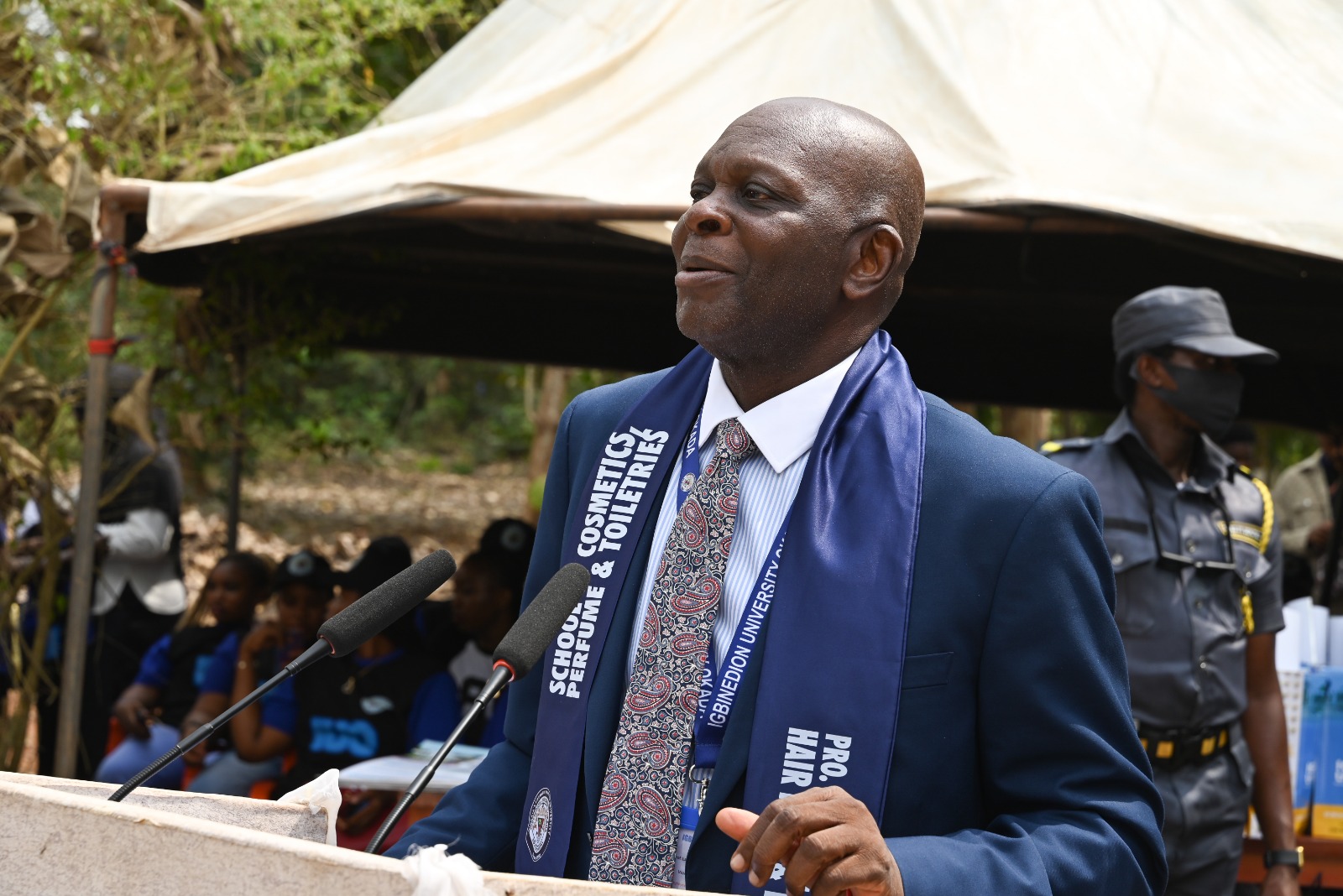
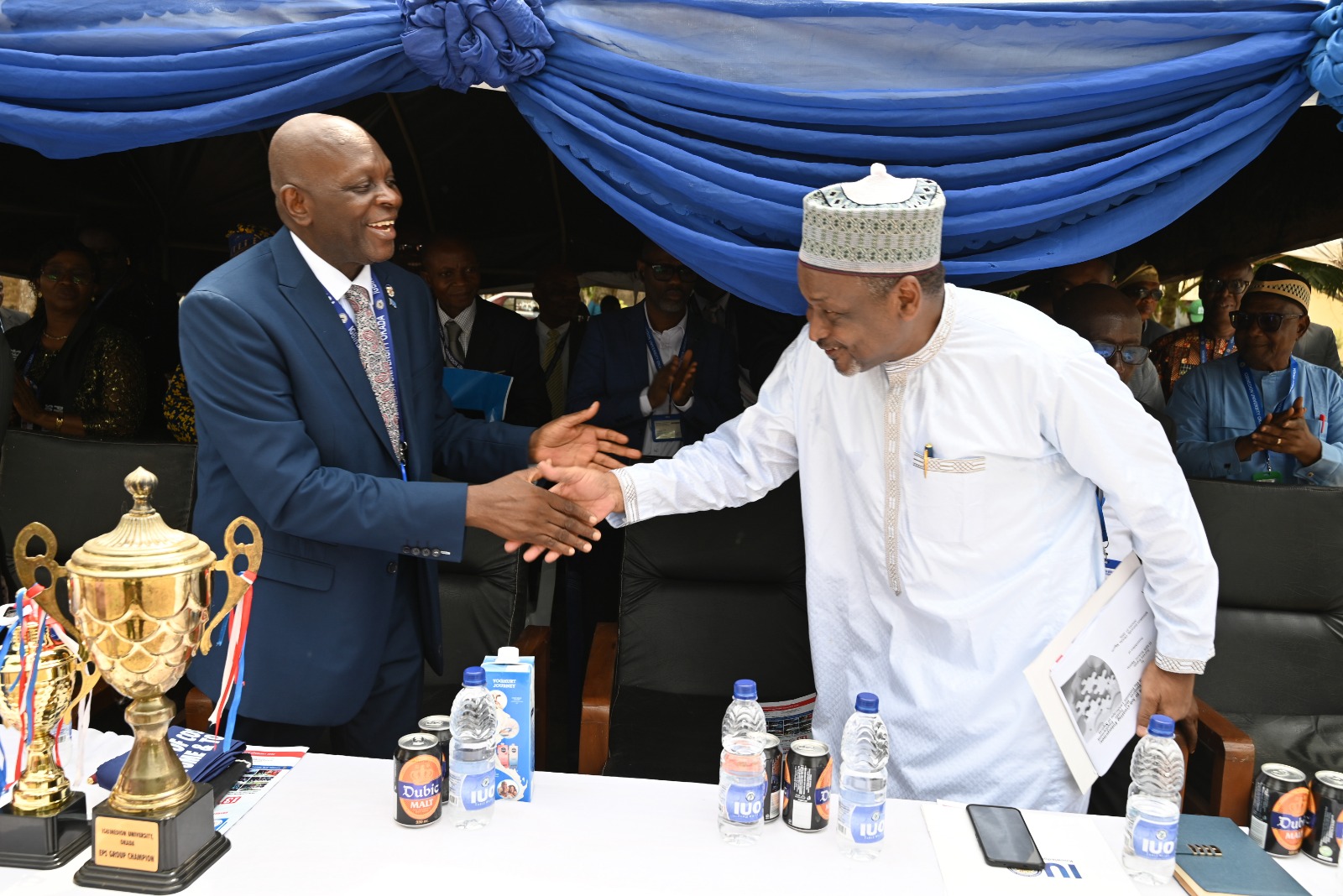
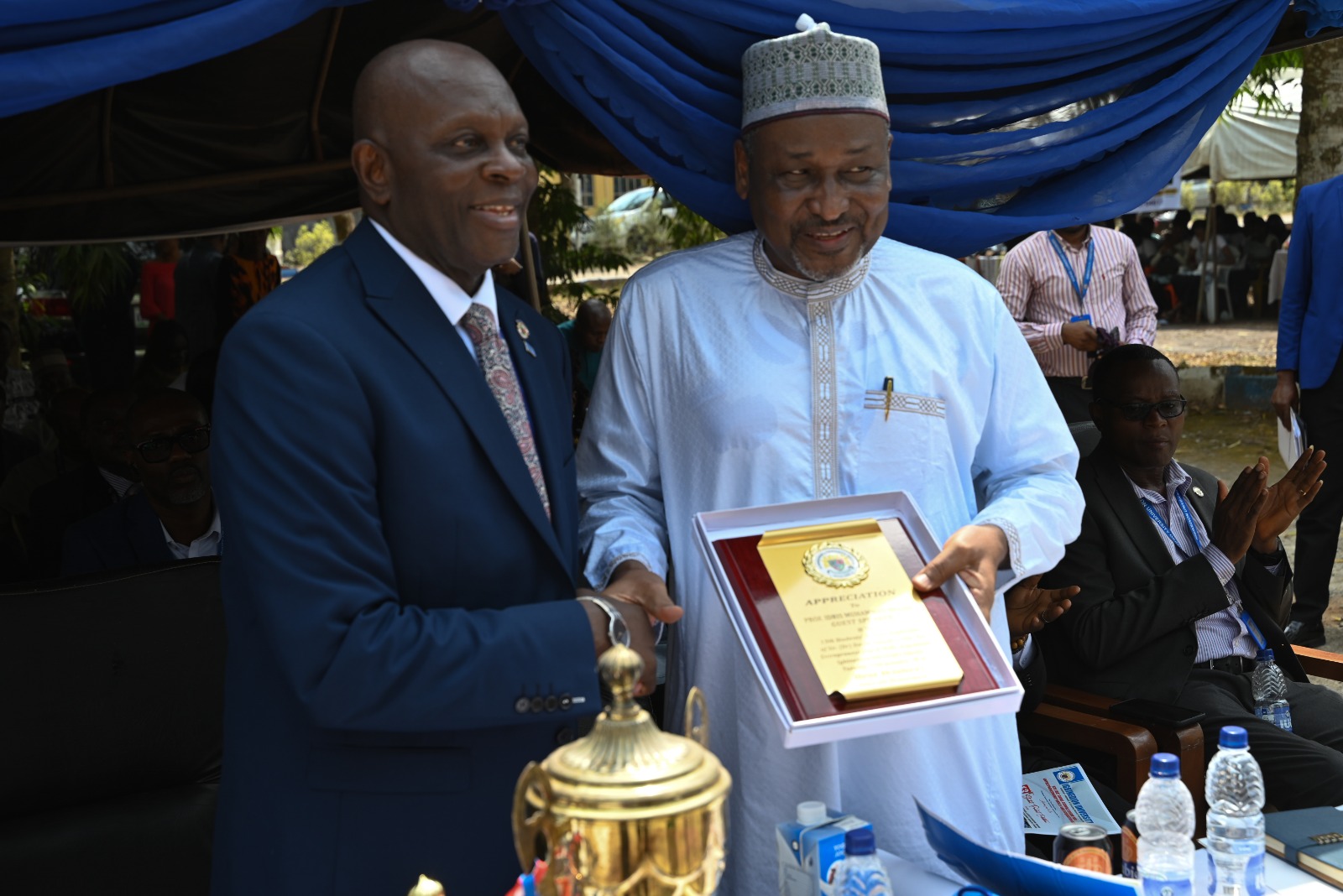
At the 13th Student Product Exhibition hosted by Igbinedion University, Okada (IUO), Vice-Chancellor Professor Lawrence Ikechukwu Ezemonye PhD, FAS, delivered a compelling call for Nigerian universities to fundamentally transform their role in society—from factories churning out job seekers to incubators of job creators and innovators.
Speaking at the event which held at the Sir (Dr.) David Osunde Centre for Entrepreneurship and Skills Acquisition, Prof. Ezemonye described the push toward entrepreneurship as far more than rhetoric: “It is a clarion call, a strategic blueprint, and a reflection of the core mission of Igbinedion University,” he asserted. With Nigeria facing persistent unemployment and underemployment despite its youthful population full of “energy and intellect,” he argued that engineering this transition is now “the most crucial” priority for higher education.
The VC painted a vivid picture of what reformed universities should achieve: “Our classrooms must be the launchpads for innovation, our curricula the moulds for resilient entrepreneurs, and our degrees the charter for economic transformation.” He directly challenged students to act boldly: “Move decisively from the classroom to job-creating enterprises,” urging them to build ventures that generate not just profit but also “dignity, opportunity, and prosperity for our communities.”
To underscore institutional support, the university awarded ₦50,000 prizes to every participating school, recognizing their contributions to the exhibition, which served as a showcase of student-created products and a practical culmination of entrepreneurial training.
Guest speaker Professor Idris Muhammad Bugaje, Executive Secretary of the National Board for Technical Education (NBTE), reinforced the urgency of reform. He warned that universities risk irrelevance unless they “rejig” their systems to embed skills and entrepreneurship training deeply into curricula. Lamenting the “dysfunctional” state of much of Nigeria’s education due to the longstanding absence of these elements, Prof. Bugaje praised IUO for proactively addressing the gap: “I am happy this university is trying to address that.”
Dr. (Mrs.) Mary Josiah, Director of the Entrepreneurial and Practical Skills (EPS) unit at IUO, provided concrete details on the university’s approach. She revealed that students begin structured skill acquisition from the 300 level onward, enrolling in programs designed to equip them for self-employment immediately upon graduation. This mandatory, hands-on training—spanning diverse areas like fashion, technology, music, tailoring, and more—ensures graduates leave with marketable, income-generating abilities rather than relying solely on traditional employment markets.
The 13th edition of the annual exhibition highlighted student ingenuity, with standout performances from schools such as Music (overall winner), Fashion and Bridal (second place), and Tailoring (third), demonstrating how theoretical ideas translate into viable, job-creating ventures.
IUO’s longstanding emphasis on entrepreneurship—pioneering its integration across disciplines since earlier editions, including mandatory courses from 200 level, mentorship, incubation support, and creative hubs—positions the institution as a leader among Nigerian private universities in preparing “future-ready” graduates amid national economic challenges. The event aligns with broader efforts to shift higher education toward value creation, innovation, and self-reliance, inspired in part by the entrepreneurial legacy of the university’s founder.